


- News
- September 27, 2026
- 7 MINS READ
KMCH NCD Study 2015 to 2026
A Decade of Community Health Surveillance
There was a simple question behind a journey that lasted ten years.
If our patients are Indian, should we not have Indian data to understand their health?
India has some of the finest doctors, hospitals, and medical professionals in the world. Every day, Indian doctors diagnose and treat millions of people with skill and dedication.
But there is another question that is equally important.
When we try to understand how diseases develop, how risk changes with age, and how early we should intervene, how much of the evidence we use truly reflects the lives of Indian people?
For years, much of modern medicine has been built on large studies and models developed in Western populations. These studies have contributed enormously to medical science and continue to be valuable.
But India is different.
- Our food is different.
- Our lifestyles are different.
- Our families are different.
- Our communities are different.
- Our patterns of disease are different.
Even the way people live, work, travel, eat, and age can be very different.
So the vision behind the KMCH Research Foundation was not simply to conduct another health survey.
It was to ask whether we could create our own evidence.
Evidence from our own people.
From our own communities.
From Indian lives.
The question became a commitment.
Under the leadership of Dr. Nalla G Palaniswami, Chairman and Managing Director of KMCH, research became an important part of the larger vision of healthcare.
The idea was simple.
If we want to understand the health of our people, we must first listen to them, observe them, and follow their health over time.
That meant going beyond the hospital.
Because a hospital sees people when they become patients.
Research can help us understand what happens before they become patients.
That thought led to the beginning of the KMCH NCD Study in 2015.
The study started by looking at communities across rural, suburban, and urban settings.
- Nallampatti.
- Thadagam.
- Kalapatti.
People were screened. Their health information was recorded. Their blood pressure, blood sugar, body measurements, and other health parameters were studied.
But the real strength of the study was not simply collecting information once.
The same people were followed again.
Years later, participants from the original surveys were reassessed during 2025 and 2026.
For the first time, the research team could look beyond a photograph of health.
They could begin to see the movie.
They could ask what happened to the same person over ten years.
- Who remained healthy?
- Who developed hypertension?
- Who developed diabetes?
- How did obesity change?
- How did metabolic health change?
- What happened inside the body before symptoms appeared?
These are questions that cannot always be answered by a single health checkup.
They require time.
They require patience.
And above all, they require people who are willing to participate and researchers who are willing to keep going.
Ten years of people, not just numbers
Behind every number in this report is a person.
- A mother.
- A father.
- A worker.
- A farmer.
- A teacher.
- An elderly person.
- A young adult.
- A child.
Someone who opened the door when the research team came to the community.
Someone who gave their time.
Someone who gave a blood sample.
Someone who came back years later.
That trust is what made this study possible.
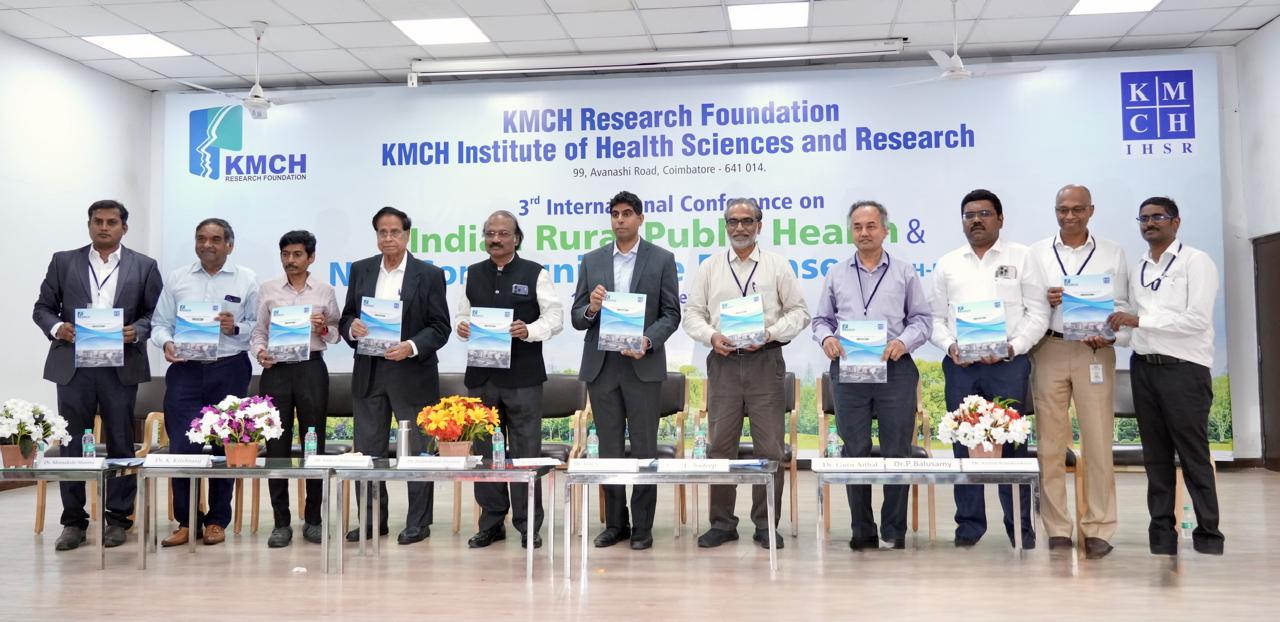
The final report acknowledges the communities of Nallampatti, Thadagam, and Kalapatti and the families who continued to participate. It also records the contribution of researchers, doctors, nurses, laboratory teams, field teams, students, academic partners, and many support teams who sustained the programme over the decade.
The work continued through weekends and holidays, and even through the challenges of the pandemic.
That is what makes this journey special.
It was not only a research project.
It was a relationship between a healthcare institution and the communities around it.
What did India look like through this data?
After ten years, the study began to reveal important changes.
- Obesity increased from 8.8 percent in 2015 to 17.6 percent in 2025.
- Hypertension increased from 40.5 percent to 55 percent.
- Diabetes increased from 16.6 percent to 36.6 percent.
These numbers tell us that the health landscape is changing.
But numbers alone are not the final message.
The deeper message is that many of these changes happen quietly.
A person may feel perfectly well while metabolic and vascular changes are already taking place.
The study therefore moved beyond conventional screening.
It began looking at subclinical cardiovascular disease, fatty liver, and other early changes.
Through the REACH Rural India study, researchers examined hidden cardiovascular risk among people who did not necessarily have obvious symptoms.
The programme also moved further into the future.
The KIDS LIVE study extended the research to children and adolescents because the roots of tomorrow’s health may begin much earlier than we think.
The journey had evolved.
- From screening adults.
- To following people over time.
- To understanding silent disease.
- To studying children.
- From one point in time to the life course.
- From treating disease to understanding health.
This is perhaps the most important idea behind the research.
Healthcare should not begin only when a person becomes sick.
If we can understand risk earlier, we may have an opportunity to act earlier.
If we know how disease develops within our communities, we can think differently about prevention.
And if we have reliable Indian data, we can begin asking better questions about what Indian people need.
The report itself speaks about the need to develop preventive policies that are tailored to Indian populations rather than relying on unnecessary or expensive treatment. It also makes an important point about the age of artificial intelligence: even the best model is only as good as the data given to it.
That thought is especially relevant today.
We are entering a world of artificial intelligence, advanced diagnostics, and precision medicine.
But before we ask technology to predict the future, we need to give it the right picture of our people.
Good data can become the foundation for better decisions.
A vision that must continue
The completion of ten years is not the end of the story.
It is the beginning of a new question.
What can we do with what we have learned?
- Can this evidence help us identify risk earlier?
- Can it help communities prevent disease?
- Can it help researchers develop better Indian models?
- Can it help healthcare move closer to prevention?
- Can it help the next generation grow up healthier?
The KMCH NCD Study has shown what can happen when a healthcare institution decides to look beyond the walls of its hospital and invest in understanding the people it serves.
It has shown that meaningful research does not always begin with a complicated question.
Sometimes it begins with a very simple one.
What if we studied our own people, in our own communities, for long enough to understand how their health really changes?
Ten years later, KMCH has a beginning to that answer.
It is contained in thousands of observations, years of follow-up, communities that opened their doors, researchers who stayed committed, and people who trusted the process.
Most importantly, it is a reminder that healthcare is not only about treating the disease we see.
It is about understanding the health we cannot yet see.
And perhaps that is the real purpose of research.
To understand today, so that we can protect tomorrow.